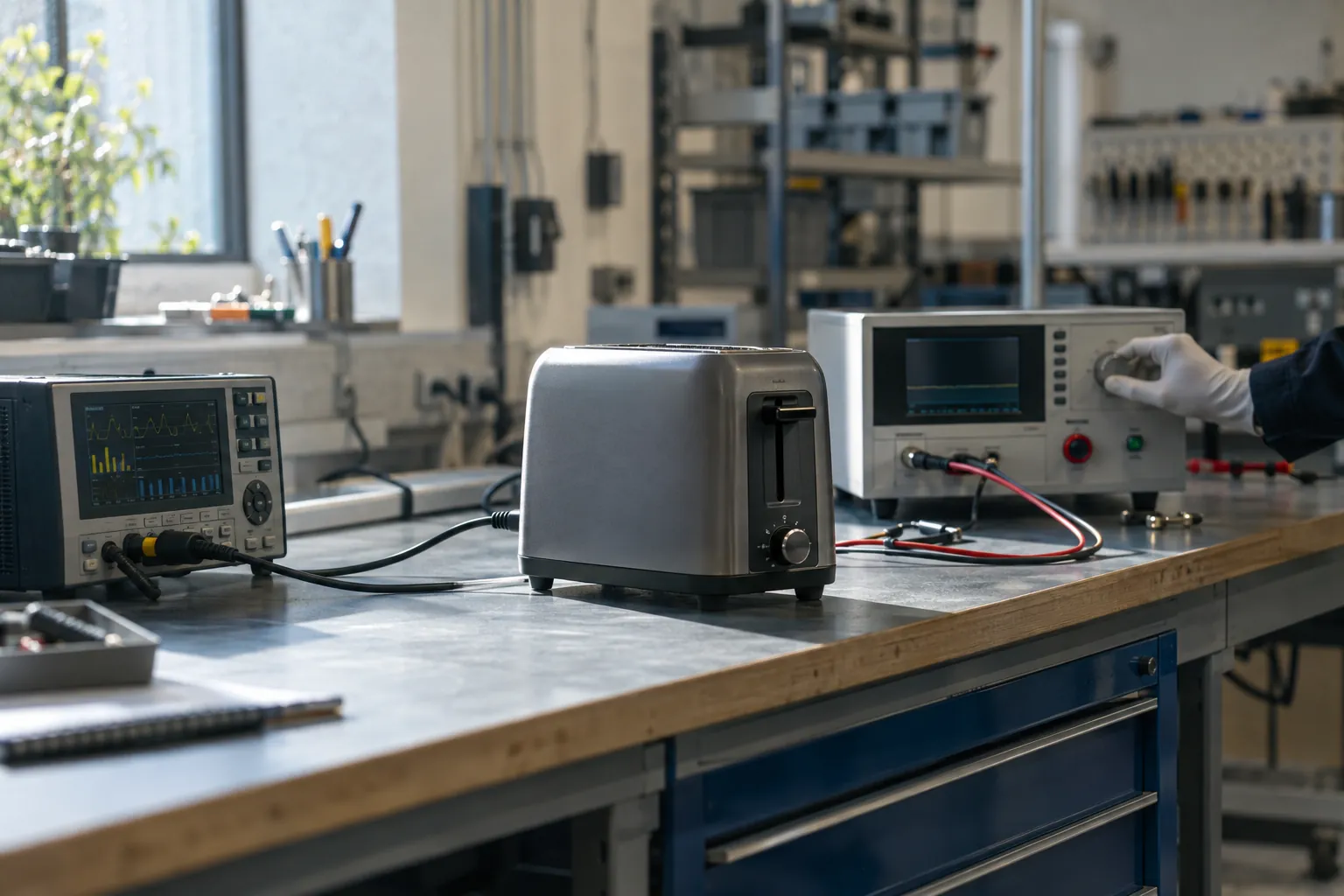
Lab tests on an electronic product fall into three families: electrical safety (insulation, leakage, temperature), electromagnetic compatibility (it neither causes nor suffers interference) and performance (battery capacity, power, consumption, noise). They are run by an accredited independent laboratory on samples from the lot, and the report serves to certify in your country and to check what the spec sheet promises.
The spec sheet says 5,000 mAh. The lab measures 3,900. The gap does not show in a visual inspection.
That is what lab tests are for.
The three families of tests
| Family | What it measures | Example |
|---|---|---|
| Electrical safety | Insulation, leakage current, temperature of parts | IEC 60335 for household appliances |
| Electromagnetic compatibility | Emissions and immunity to interference | Audio and computer equipment |
| Performance | What the spec sheet promises | Battery capacity, lumens, power, noise |
Factory lab or independent lab
Many factories have their own lab for line testing. To certify and to compare suppliers, use an independent laboratory accredited to ISO/IEC 17025, the standard for testing laboratories.
When to ask for them
- When approving the sample of a new product.
- When a key component changes, such as the battery or the motor.
- When your country requires a certificate to import.
- Once a year on repeat products, to catch changes.
The required standards depend on the product and the destination country. Your customs broker or your country's certification body confirms which apply.
Frequently asked questions
Is the factory's report enough?
As a reference, yes; to certify or compare, use a recent independent one on the same model.
How many samples does the lab need?
It depends on the tests; some destroy the sample, so send extra.