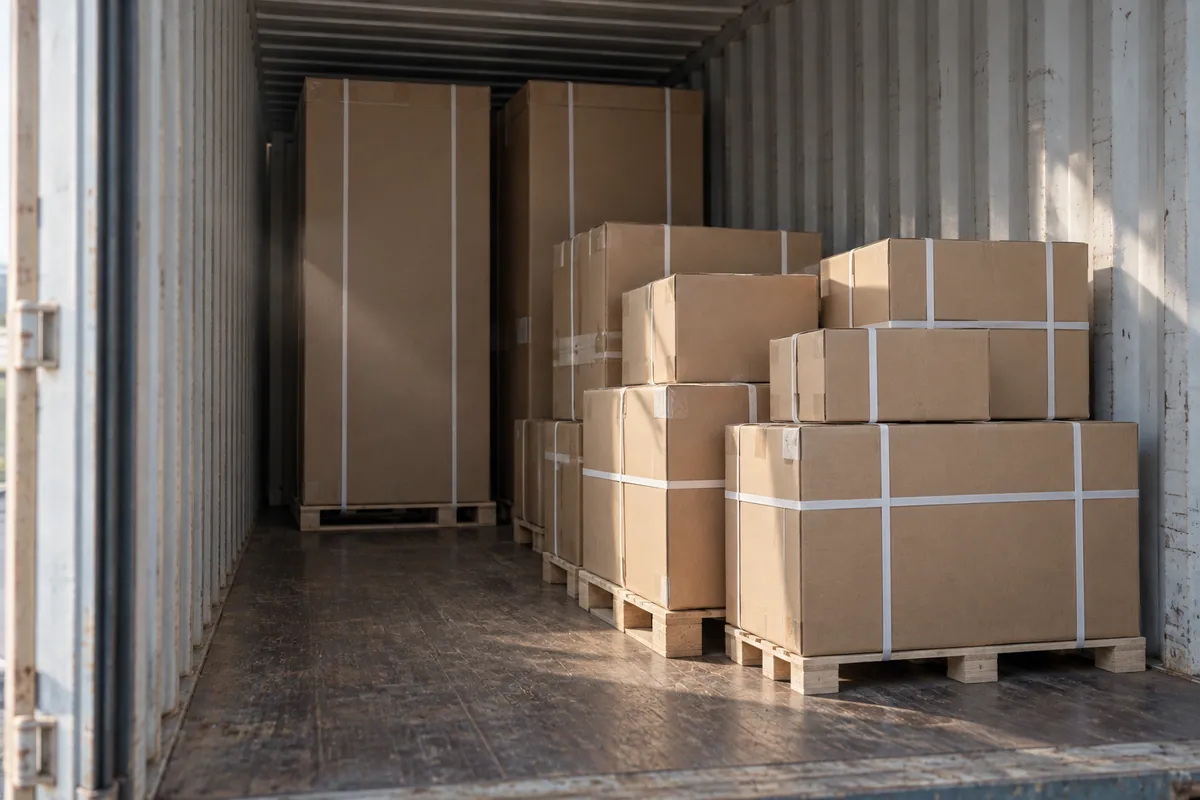
Consolidation means gathering goods from several factories in a warehouse in China so they load into one container. It works when there is a receiving cut-off date, a check of each delivery against its packing list, and a rule agreed in advance for the factory that arrives late.
When you buy from one factory, the container is loaded at its door. With three or four suppliers, someone has to receive, count, store and arrange the cargo before the truck with the container arrives.
The cut-off date rules
The cut-off date is the last day the warehouse accepts goods for that container. It is worked out backwards from the loading day and sent in writing to every factory.
If a factory delivers after the cut-off, the container either leaves without its goods or waits. That decision is best made ahead of time, with numbers in hand.
What is checked on receipt
| Check | What it looks for |
|---|---|
| Carton count against the packing list | Shortages or extra cartons |
| Packaging condition | Wet, crushed or reopened cartons |
| Carton marks | Model, quantity and numbering matching your order |
| Photos of each delivery | Dated evidence per factory, before the cargo is mixed |
Any difference is claimed from that factory on the spot. Once the cargo is mixed, it is much harder to tell whose carton was damaged.
When a factory runs late
| Option | Makes sense if | Added cost |
|---|---|---|
| Wait a few days | The delay is short and those goods are the core of the order | Storage and a possible change of vessel booking |
| Ship without those goods | They are a small part of the container | A separate shipment as less-than-container cargo |
| Change the loading order | The goods arrive on loading day | Risk of loading without a full check |
The most useful rule is to set in advance the maximum number of days you will wait. That way nobody improvises in shipping week.
Documents for a container from several factories
- A consolidated packing list showing which cartons belong to which factory and which invoice.
- Each supplier's invoice, which your customs broker will need at destination.
- The loading plan: what goes at the back, what goes at the front and how many cartons of each product.
- Photos of the loading and of the seal when the container is closed.
Before your first consolidated container, confirm with whoever coordinates the shipment how the export declaration will be filed in China when the goods come from several companies, and which documents your customs at destination requires.
Free storage time, daily charges and conditions vary by city and warehouse operator. Get them in writing before the first delivery.
Frequently asked questions
Consolidate in China or ship each order separately?
If the combined orders come close to a container, consolidating usually lowers the cost per unit. If they add up to a few cubic meters, less-than-container shipping may work better.
Who is responsible for a carton damaged at the warehouse?
It depends on when the damage happened. That is why each delivery is photographed on receipt, before it is mixed with the rest.